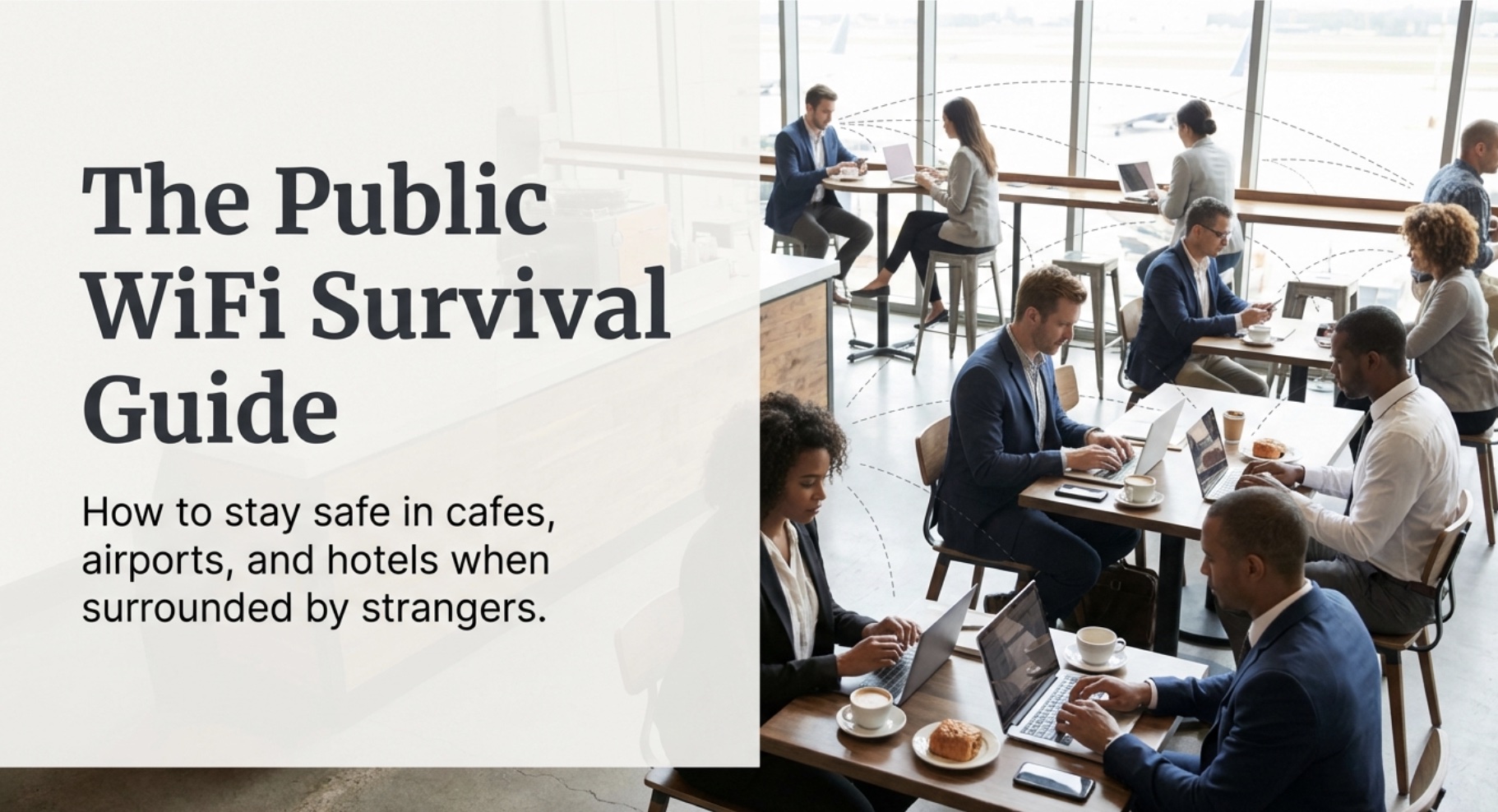
Using public WiFi is convenient, but it can also be risky. Whether you are working from a coffee shop, checking email at the airport, or streaming from a hotel room, unsecured networks can expose your private data to hackers, trackers, and malicious software.
That is why using a VPN on public WiFi is one of the smartest things you can do.
If you want a simple option, you can [protect yourself with NordVPN on public WiFi] before connecting to any shared network.
Why Public WiFi Is Risky
Public WiFi networks are often open to everyone. That means you are sharing the same network environment with strangers, and sometimes with attackers looking for easy targets.
Here are some common risks:
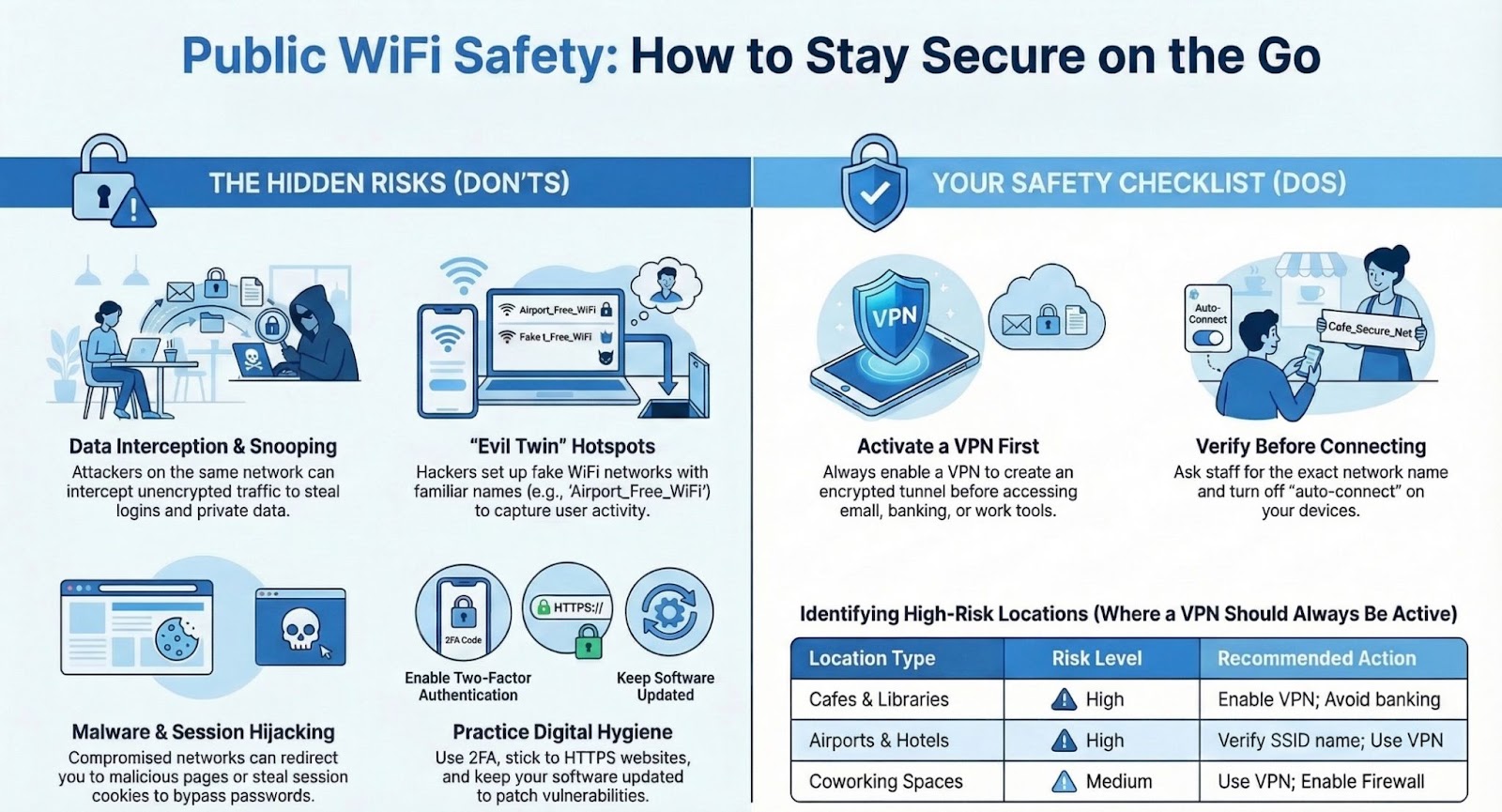
1. Data interception
On unsecured or poorly configured networks, attackers may try to intercept your traffic. This can expose browsing activity, login details, or other sensitive information.
2. Fake WiFi hotspots
Hackers sometimes create WiFi names that look legitimate, such as “Airport Free WiFi” or “Hotel Guest Internet.” If you connect to the wrong one, they may be able to monitor your activity.
3. Session hijacking
Even if you do not type your password, an attacker may try to steal session cookies and gain access to accounts that are already logged in.
4. Malware delivery
Some compromised networks can redirect users to malicious pages or attempt to load harmful scripts and files.
That is why many travelers and remote workers [use a VPN before joining public WiFi].
What Hackers Can Do on Public WiFi
People often assume public WiFi is harmless because it is offered by a known business. But the network itself may not be secure.
Here are a few real-world examples of what can happen:
Snooping on unencrypted traffic
If a website or app is not properly secured, someone on the same network may be able to see pieces of your activity.
Creating an “evil twin” hotspot
An attacker sets up a fake access point with a familiar name. Once people connect, the attacker can route traffic through their own device.
Redirecting users to phishing pages
A malicious actor may try to send you to a fake login page for email, banking, or social media.
Capturing personal habits
Even when passwords are not exposed, data about your browsing patterns, location, device type, and usage can still be valuable.
For that reason, many people [get NordVPN for travel and public hotspot protection] instead of relying on public networks alone.
How a VPN Protects You on Public WiFi
A VPN, or virtual private network, creates an encrypted tunnel between your device and the VPN server. That makes it much harder for other people on the same network to see what you are doing.
Here is what a VPN helps with:
Encrypts your internet traffic
Hides your IP address from the local network
Reduces the risk of traffic interception
Adds a layer of privacy on shared connections
So even if you are using WiFi at a cafe, airport, library, or hotel, your connection is far more secure with a VPN enabled.
A good place to start is to [use NordVPN to secure public WiFi connections] before opening email, banking, work tools, or social apps.
Why NordVPN Is a Good Choice for Public WiFi
There are many VPNs out there, but NordVPN is one of the better options for people who want something fast, easy, and practical for everyday use.
Strong encryption
NordVPN helps protect your internet traffic with strong encryption, which is especially useful on open networks.
Easy to use
You do not need technical knowledge to get started. Install the app, open it, and connect before using public WiFi.
Fast enough for daily browsing
Some VPNs slow your connection too much. NordVPN is generally a better fit for people who still want decent speed for work, streaming, and browsing.
Useful for travel
If you travel often, a VPN can help you stay safer on hotel and airport WiFi while also improving privacy.
If that sounds like what you need, you can [check NordVPN here].
When You Should Always Use a VPN
You should strongly consider turning on your VPN anytime you use:
Coffee shop WiFi
Hotel WiFi
Airport WiFi
Coworking spaces
Library WiFi
School or campus guest networks
Any open or shared hotspot
A simple rule works well:
If the WiFi is not yours, use a VPN.
That is why so many users [activate NordVPN before connecting to public hotspots].
Public WiFi Safety Tips Beyond Using a VPN
A VPN is one of the best protections, but it should be part of a bigger safety routine.
Here are a few smart habits:
Verify the network name
Ask staff for the exact WiFi name before connecting.
Avoid sensitive logins when possible
Try not to access banking or critical accounts unless necessary.
Turn off auto-connect
Your device should not automatically join unknown networks.
Keep software updated
Updates often patch security issues.
Use HTTPS websites
Secure websites add another layer of protection.
Enable two-factor authentication
If an attacker gets your password, 2FA can still help protect the account.
For stronger protection overall, many users [pair these habits with NordVPN] on laptops and phones.
Is a Free VPN Good Enough for Public WiFi?
Free VPNs can be tempting, but they often come with tradeoffs such as slower speeds, limited server choices, data caps, ads, or questionable privacy practices.
When you are trying to protect your data on public WiFi, reliability matters.
That is one reason many users prefer to [choose NordVPN instead of a free VPN].
Final Verdict: Best VPN for Public WiFi
If you regularly use WiFi in cafes, airports, hotels, or other shared places, a VPN is one of the easiest ways to reduce your risk.
Public networks are convenient, but they are not built for privacy. A VPN adds an important layer of security by encrypting your traffic and making it harder for others on the network to snoop on you.
If you want a practical option for safer browsing, travel, and remote work, [try NordVPN for public WiFi protection].
Disclosure: This article contains affiliate links. If you buy through these links, I may earn a commission at no extra cost to you.