The modern world is increasingly connected through science, technology, and global cooperation. Advances in space exploration, satellite systems, Earth sciences, and aviation continue to influence not only researchers and governments but also everyday life.
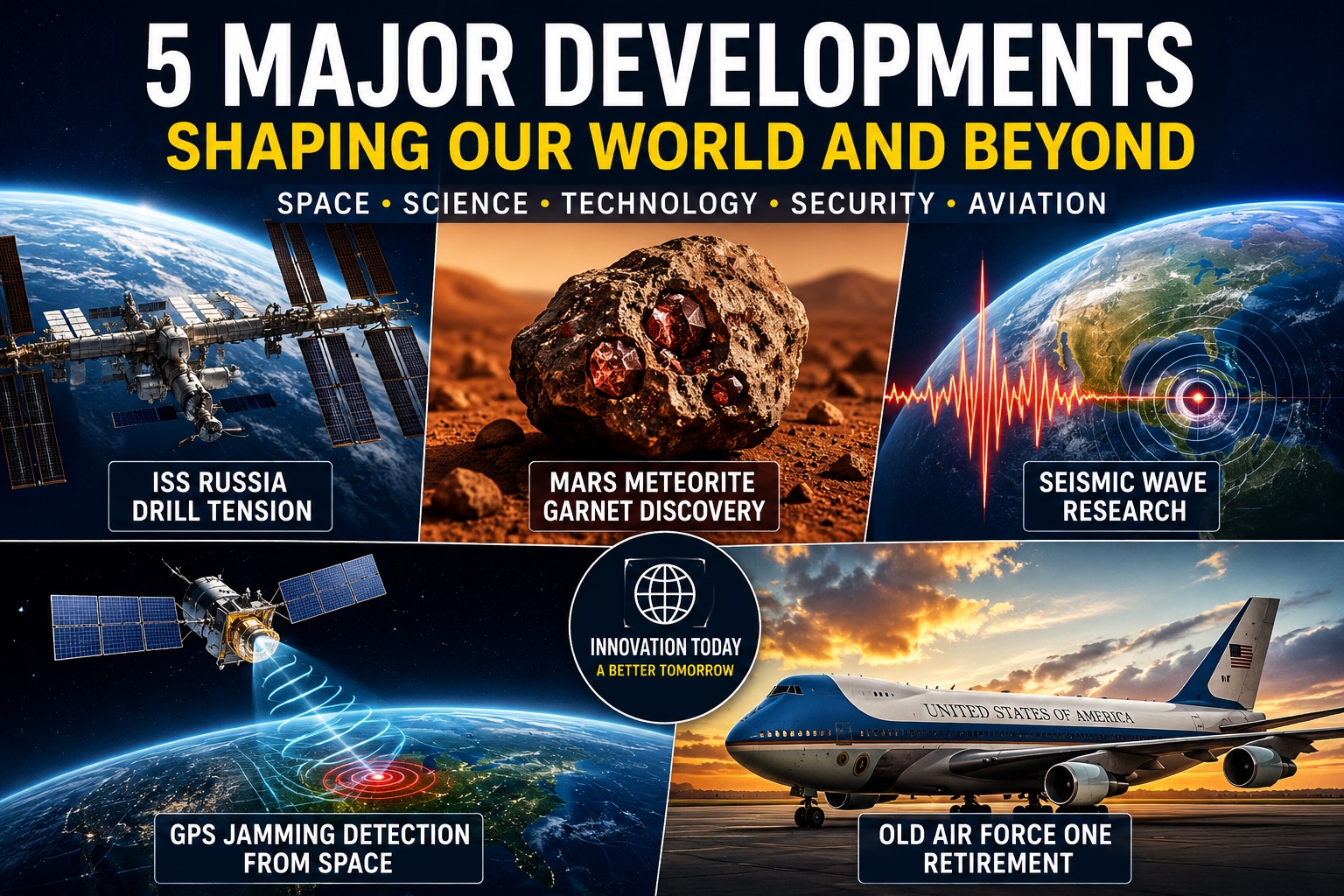
Recent developments have drawn attention to several fascinating topics: operations aboard the International Space Station, discoveries within Martian meteorites, advances in seismic wave research, new methods for detecting GPS interference from orbit, and discussions surrounding the retirement of older Air Force One aircraft.
While these subjects span very different fields, they all reflect humanity’s ongoing pursuit of knowledge, security, and innovation.
International Cooperation and Challenges Aboard the ISS
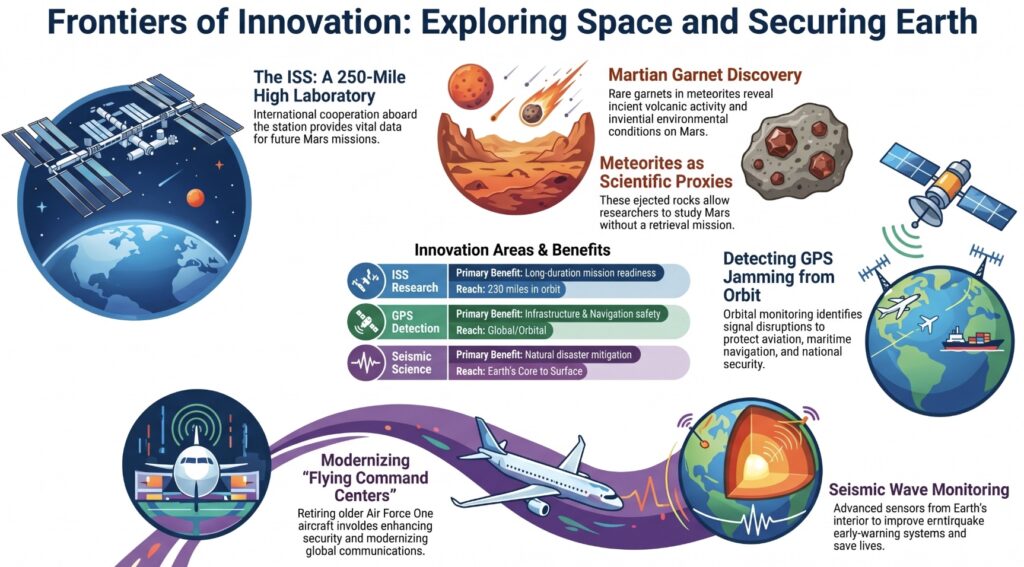
The International Space Station (ISS) remains one of the most ambitious international projects ever undertaken. Orbiting approximately 250 miles above Earth, the station serves as a laboratory where astronauts and cosmonauts conduct scientific research that would be impossible under Earth’s gravity.
Discussions surrounding ISS Russia drill tension have highlighted the complex relationship between international cooperation and geopolitical realities. Despite political disagreements on Earth, the ISS continues to demonstrate how nations can work together toward shared scientific goals.
Maintaining a permanently occupied space station requires constant coordination, technical expertise, and trust among participating agencies. Every operational procedure, maintenance activity, and safety protocol plays a critical role in ensuring the success of long-duration missions.
As humanity looks toward future lunar bases and eventual missions to Mars, the lessons learned aboard the ISS will remain invaluable.
What a Mars Meteorite Garnet Discovery Can Tell Us
The discovery of garnet minerals within a Mars meteorite has generated excitement among planetary scientists.
Meteorites originating from Mars provide researchers with a rare opportunity to study the Red Planet without launching a mission to retrieve samples. These rocks were ejected from Mars by ancient impacts and eventually found their way to Earth.
A Mars meteorite garnet discovery is significant because garnets form under specific pressure and temperature conditions. By analyzing their chemical composition, scientists can gain insight into:
- Ancient Martian geology
- Planetary formation processes
- Volcanic activity
- Historical environmental conditions
Understanding how Mars evolved over billions of years helps researchers answer one of the most important questions in planetary science: could the planet once have supported life?
Each new discovery adds another piece to the puzzle of Mars’ complex history.
Why Seismic Waves Matter More Than Ever
The study of seismic waves remains one of the most important tools for understanding Earth’s interior.
When earthquakes, volcanic eruptions, or other geological events occur, energy travels through the planet in the form of seismic waves. By measuring how these waves move through different layers of Earth, scientists can map structures that would otherwise be impossible to observe.
Modern seismic wave research extends far beyond earthquake monitoring. Advanced sensors and data analysis techniques are helping researchers:
- Improve earthquake early-warning systems
- Monitor volcanic activity
- Study tectonic plate movement
- Better understand Earth’s internal structure
As populations continue to grow in seismically active regions, improvements in seismic science have the potential to save lives and reduce economic damage from natural disasters.
Detecting GPS Jamming From Space
Global Positioning System technology has become an essential part of modern civilization.
Everything from navigation apps and airline operations to shipping logistics and emergency services depends on reliable satellite positioning signals. However, these signals can sometimes be disrupted through intentional or accidental interference.
Recent advances in GPS jamming detection from space are helping governments and researchers identify areas where signal disruptions occur.
By monitoring interference patterns from orbit, satellite systems can provide a broader view of GPS disruptions than ground-based monitoring alone. This capability has important implications for:
- Aviation safety
- Maritime navigation
- National security
- Telecommunications infrastructure
- Emergency response systems
As societies become increasingly dependent on satellite-based technologies, protecting GPS signals will remain a critical priority.
The Legacy of Older Air Force One Aircraft
Few aircraft are as recognizable as Air Force One.
More than simply a mode of transportation, Air Force One functions as a flying command center capable of supporting presidential operations anywhere in the world.
Discussions surrounding old Air Force One retirement plans have renewed interest in the aircraft’s historical significance. These planes have transported presidents through major world events, diplomatic missions, and moments that shaped modern history.
Retiring an older Air Force One aircraft involves far more than replacing a plane. The process includes:
- Preserving historical artifacts
- Evaluating security requirements
- Modernizing communications systems
- Enhancing operational capabilities
For aviation enthusiasts and historians, the retirement of an iconic presidential aircraft represents the end of one era and the beginning of another.
A Common Thread Connecting These Stories
Although the International Space Station, Martian meteorites, seismic waves, GPS security, and Air Force One may appear unrelated, they share a common theme: humanity’s drive to explore, understand, and protect its future.
Space stations push the boundaries of international cooperation. Martian meteorites reveal the history of another world. Seismic science helps us better understand our own planet. GPS monitoring safeguards critical infrastructure. Advanced aircraft ensure the continuity of government operations.
Together, these developments demonstrate how scientific research and technological innovation continue to shape the world around us.
As new discoveries emerge and technologies evolve, the connections between exploration, security, and knowledge will only become more important.
Disclaimer
This article is intended for informational and educational purposes only. Scientific findings, government programs, and technological developments continue to evolve as new research and information become available.