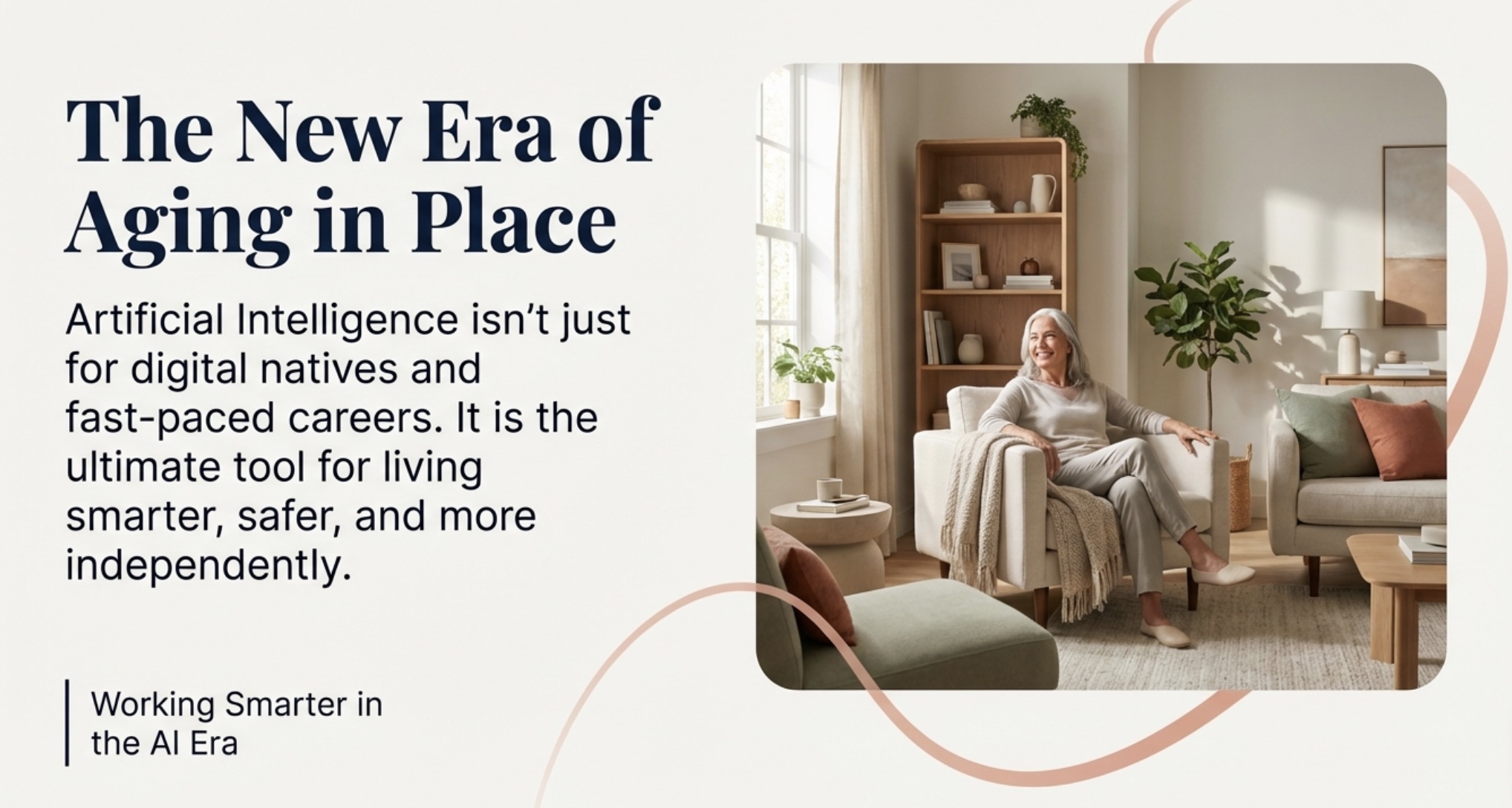
Working Smarter in the AI Era — Part 9
Introduction
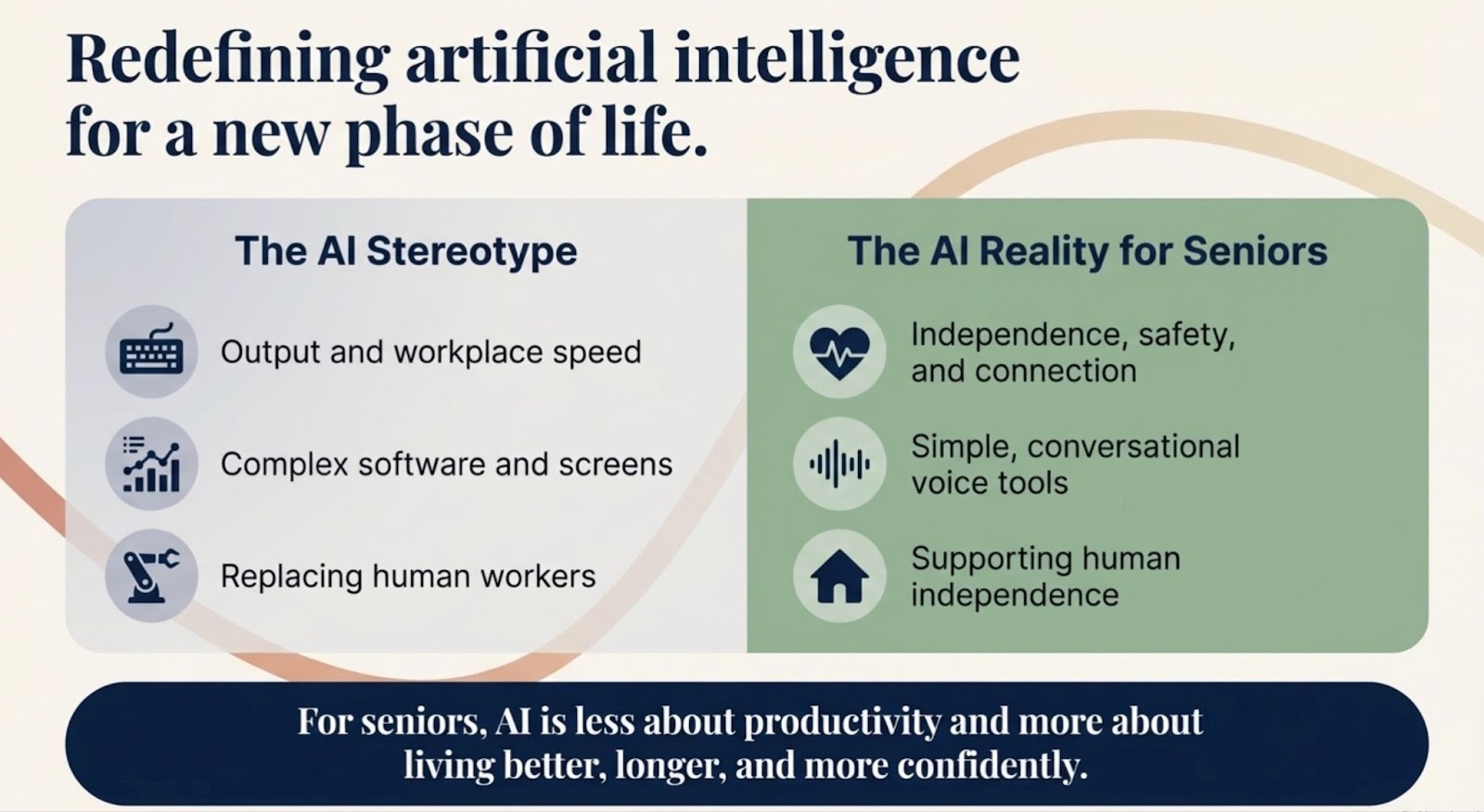
The rise of artificial intelligence is often framed around younger generations, digital natives, and fast-paced careers. But one of the most powerful — and often overlooked — groups that can benefit from AI is seniors.
AI is not just about productivity at work. It’s about living smarter, safer, and more independently.
For seniors, AI can:
Simplify everyday tasks
Reduce reliance on others
Improve health monitoring
Strengthen connections with family
Provide companionship and cognitive stimulation
And the best part? Many AI tools today are designed to be simple, conversational, and intuitive — no technical background required.
This article explores how seniors can practically use AI to enhance daily life — not replace human connection, but support independence and quality of life.
Why AI Matters for Seniors Today
The global population is aging rapidly. According to the United Nations, by 2050, 1 in 6 people in the world will be over age 65.
At the same time:
Families are more geographically distributed
Healthcare systems are increasingly strained
Digital services are becoming the default
This creates a gap — and AI helps bridge it.
AI acts as:
A personal assistant
A health companion
A safety layer
A learning partner
Instead of being left behind by technology, seniors can use AI to stay ahead and stay empowered.
1. Everyday Life Made Easier
AI can handle small but meaningful daily tasks that often become frustrating or time-consuming.
Examples:
Setting reminders for medications
Managing schedules and appointments
Creating shopping lists
Answering quick questions (“What’s the weather today?”)
Reading text aloud
Tools:
Voice assistants (smart speakers, phones)
AI chat assistants
Calendar automation apps
Real Impact: Reduces mental load and helps maintain independence without relying on family members for every small task.
2. Health Monitoring and Support
Healthcare is one of the biggest areas where AI provides real value for seniors.
What AI Can Do:
Track daily activity and movement
Monitor heart rate and sleep patterns
Send medication reminders
Detect unusual patterns (e.g., falls, inactivity)
Provide basic health guidance
Examples:
Smartwatches and wearable devices
AI-powered health apps
Remote monitoring systems connected to caregivers
Real Impact: Early detection, better prevention, and increased peace of mind for both seniors and their families.
3. Staying Connected with Family and Friends
Loneliness is a serious issue among older adults. AI can help bridge that gap.
How AI Helps:
Simplifies messaging and video calls
Translates languages in real time
Helps write messages or emails
Suggests when to reach out to loved ones
Practical Uses:
“Write a message to my grandson for his birthday”
“Call my daughter”
“Translate this message into English”
Real Impact: Stronger relationships, more frequent communication, and reduced social isolation.
4. Safety and Fraud Protection
Seniors are often targeted by scams — phone calls, emails, and online fraud.
AI can act as a protective layer.
What AI Can Do:
Detect suspicious emails or messages
Warn about scam calls
Help verify information (“Is this message real?”)
Provide guidance before taking action
Example:
Before clicking a link or sending money, a senior can ask: “Is this safe?” — and get a clear explanation.
Real Impact: Reduced risk of financial loss and increased confidence in using digital tools.
5. Learning and Mental Stimulation
Keeping the brain active is critical for long-term cognitive health.
AI opens up endless opportunities for learning.
Possibilities:
Learning new hobbies (cooking, music, languages)
Asking questions anytime
Playing brain games
Reading summaries of books or news
Example:
“Explain how photography works in simple terms” “Teach me basic Spanish phrases”
Real Impact: Continuous learning, mental engagement, and a sense of growth at any age.
6. Companionship and Emotional Support
While AI cannot replace human relationships, it can provide meaningful interaction.
What AI Offers:
Conversation anytime
Emotional check-ins
Storytelling and entertainment
Guided relaxation or prayer
Example:
Talking through thoughts
Listening to stories
Asking for encouragement
Real Impact: Reduced feelings of loneliness and increased emotional well-being.
7. Smart Home Integration
AI-powered homes can make daily living safer and more convenient.
Features:
Voice-controlled lights and appliances
Smart doorbells and security cameras
Automated temperature control
Emergency alerts
Example:
“Turn off the lights” “Lock the door” “Call for help”
Real Impact: Improved safety, comfort, and independence at home.
Challenges Seniors May Face with AI
While AI offers many benefits, adoption is not always smooth.
Common Barriers:
Fear of technology
Lack of confidence
Complexity of interfaces
Privacy concerns
How to Overcome:
Start with simple, voice-based tools
Focus on one use case at a time
Use family support or guided setup
Choose tools designed for simplicity
AI should feel like a helper — not a burden.
Practical Starting Plan (Simple & Realistic)
If a senior wants to start using AI, here’s a simple roadmap:
Step 1: Start with Voice
Use a smartphone or smart speaker → Ask basic questions daily
Step 2: Add Reminders
Set medication and appointment reminders
Step 3: Use AI for Communication
Ask AI to help write messages
Step 4: Explore Health Tools
Try a wearable device or health app
Step 5: Expand Gradually
Add more features only when comfortable
The Bigger Picture
AI is not about replacing people — especially for seniors.
It’s about:
Supporting independence
Enhancing safety
Enabling connection
Improving quality of life
For seniors, AI is less about productivity and more about living better, longer, and more confidently.
Conclusion
Seniors are not late to the AI era — they are perfectly positioned to benefit from it.
With the right tools and a simple approach, AI can:
Make daily life easier
Keep them healthier
Keep them connected
Help them stay independent
The future of AI is not just for the young and tech-savvy.
It’s for everyone.
Internal Links (Series)
How Marketing Professionals Can Work Smarter with AI
How Product Manager Can Work Smarter with AI
How Accountants Can Work Smarter with AI
How B2B Sales Can Work Smarter with AI
How Students Can Work Smarter with AI
How HR Can Work Smarter with AI
How Data Analysts Can Work Smarter with AI
How Translators Can Work Smarter with AI
How Junior Programmers Can Work Smarter with AI
How Online Retailers Can Work Smarter with AI
How Traders Can Work Smarter with AI
References
United Nations – World Population Ageing Report
World Health Organization – Aging and Digital Health
Pew Research Center – Technology Adoption Among Older Adults
National Institute on Aging – Cognitive Health and Aging
AARP – Technology Trends for Older Adults
Disclaimer
This article is for informational purposes only and does not constitute medical, financial, or professional advice. AI tools mentioned are general examples and may vary by region, accessibility, and individual needs. Users should evaluate tools carefully and consult with professionals where appropriate.